The University Bookman
Reviewing Books that Build Culture
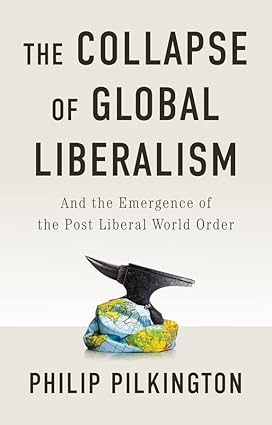
The Long Decline of Liberalism
“Pilkington describes the many societal ills that this destruction of hierarchies entailed… While Pilkington’s diagnosis of liberalism as the source of these diseases seems sound, his confidence that global liberalism is collapsing rapidly and that the immediate future will be ‘post-liberal’ leaves me uneasy. Even if we grant that liberalism is an inherently unstable way of organizing a polity, does that really allow us to predict just how rapidly that instability will lead to a downfall?”
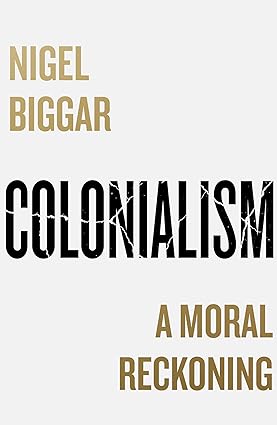
The British Empire on Trial
“[Biggar’s] book amounts to a defense of the British Empire. He succeeds at giving the reader ample reasons not to hate his home country, but also misses an opportunity to use his unique training to pioneer a more innovative form of history.”
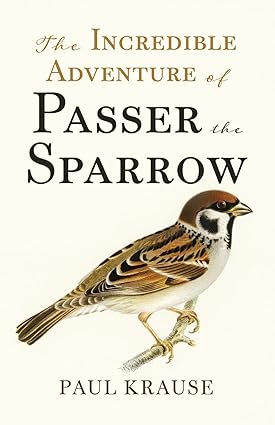
A Heroic Little Sparrow Shines Brightly in the Dark World of Children’s Literature
“The story is as delightful and charming as it sounds, recounting the odyssey of a virtuous sparrow named Passer who must move his family to a new home after ‘big yellow machines’ appear at his home.”
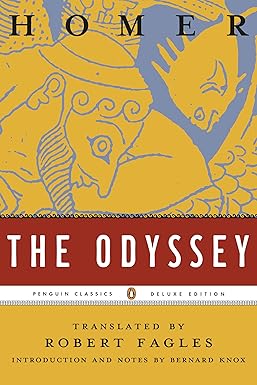
Ulyssean Interrogations at Dusk, or Slowing Down at 65
“Odysseus himself was offered immortality by the nymph Calypso—and refused it. He chose instead to return to his wife Penelope, a mortal woman who would age. He chose to return to a finite life marked by loss, memory, and longing; and in that choice, I have always thought, lies his greatest courage—and his deepest wisdom… I hope and I believe that I would have made the same Ulyssean decision.”
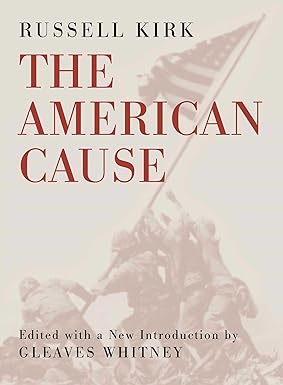
What the American Revolution Secured: Order, Justice, and Freedom
Throughout the semiquincentennial year celebrating America’s independence, The University Bookman will invite a range of writers and speakers to contribute to a series drawing upon Russell Kirk’s work on the American Revolution and the constitutional order it secured.

From the Man Who Loved America
“Angelo Codevilla advanced and argued for an anti-Wilsonian approach to both American foreign and American domestic policy.”
Smithian Wisdom on Demand
“Even readers who disagree with the collection’s broad normative valence will find that it consistently models a way of reading Smith as a unified thinker about persons-in-society—morally formed agents embedded in evolving rules, conventions, and institutions.”
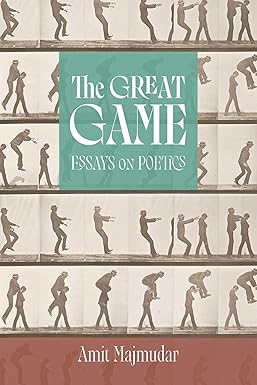
In Praise of Poetry and Form
“Majmudar often takes the long view, and from the long view, free verse is a new arrival in a variegated poetic history that stretches back into prehistory. To embrace it alone is to cut oneself off from that sweeping history and from the resources to be found there. There is still vitality in these neglected traditions. They are not a dead past.”
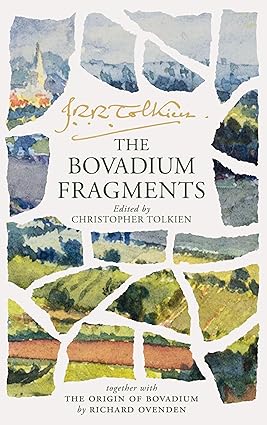
Monster is the Machine
“Few outside of Tolkien’s most dedicated students, however, were aware that he had written an entire satirical story against the automobile… [It] is (or rather was) the last significant piece of original Tolkien fiction to remain unpublished.”
The Book Gallery
A collection of conversations with Bookman editor Luke C. Sheahan and writers and authors of imagination and erudition. Click on the icon in the upper right corner of the video to see more episodes in this series or check out our YouTube page.

Shop through Regnery
Support the Kirk Center
& University Bookman